

Camera buying guide: What you need to know
Camera buying guide: What you need to know

In that location are two basic kinds of cameras: smartphones and everything else. Phone cameras have gotten so good that they take more often than not killed off the "signal and shoot" class of budget devices for capturing daily life.
Merely the size constraints of a smartphone limit its abilities. Bigger cameras tin offer longer zoom, larger sensors that capture improve detail, and sophisticated optics for refined furnishings similar shallow depth of field in portraits. This photographic camera ownership guide takes you through the limits of smartphones and the added features you can get from other types of devices, such every bit span cameras, DSLRs and mirrorless cameras.
Types of cameras
Phone cameras
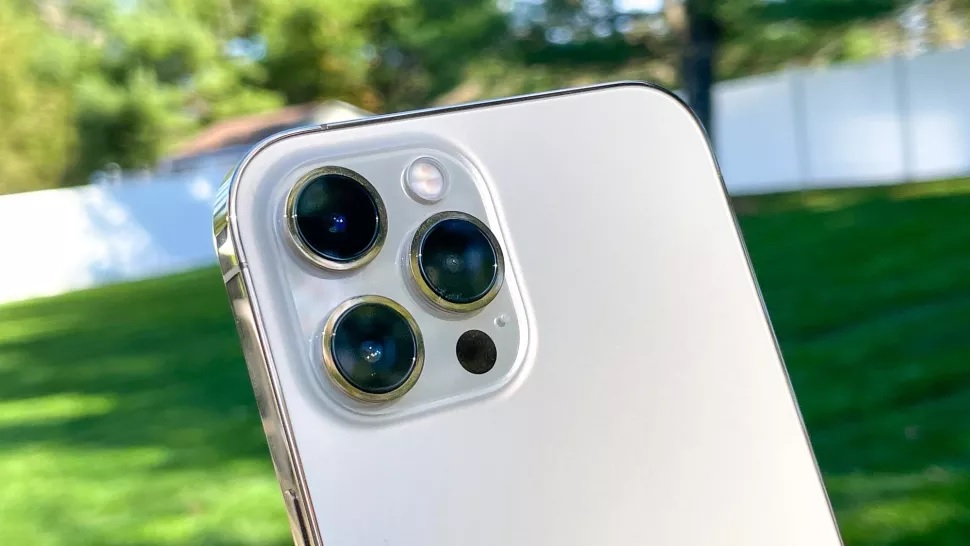
Telephone Cameras: Key Specs
Toll Range: $100 to $1,400
Pros:Easily share images and videos over cellular and Wi-Fi networks; no need to bring an actress camera; huge number of photo apps let you tweak your photos; epitome quality every bit least as adept as a point-and-shoot's; pocket-sized sensors provide deep depth of field.
Cons:Tiny image sensors tend to produce digital grain — aka "noise" — in low-light images; pocket-sized built-in lenses provide express optical zoom range.
Key Features: Connectivity; convenience; sharing; burst (rapid) shot and panorama modes; image stabilization on some models; 4K and better video on higher-finish models.
Key Accessories: Phone cases; photo apps; improver lenses, grips and tripods in some cases.
The range of smartphones on the market today means a lot of variety in photographic capabilities. In addition to a selfie cam on the front, entry-level smartphones may accept only a single rear-facing camera. But higher-end models avowal 2 or even iii rear cameras to capture images at different focal lengths. All smartphones come with a moderate wide-angle lens rear camera. 2-photographic camera phones typically add together an ultra-wide lens, and three-photographic camera models include a slight telephoto lens that provides a fleck of zoom for portraits or other closeups.
Smartphone camera resolution is all over the place. Some smartphone makers, like Apple, hold the line at resolution and focus on increasing the size of the pixels on the sensor, which leads to better images, especially in lower lite. The iPhone 12 Pro, for instance, has three 12-megapixel rear cameras (which is plenty resolution for most photography). Other phones max out on resolution. The Samsung Galaxy S21, for case, includes a 64MP camera, and the Xiaomi Mi x 5G features a 108MP sensor. Such loftier resolution allows you to crop heavily into a photo and however have plenty of pixels.
Many modern smartphones capture 4K video, and some go up to 8K.
The all-time smartphone cameras likewise have more sophisticated software features to improve color, dissimilarity and detail or to perform tricks like erasing stray subjects from the frame or creating a shallow depth of field result. Better smartphone cameras also include tedious-movement video options.
One advantage that the Apple iPhone has over other smartphones is that there are many iPhone lens kits that will aid you lot become more out of that telephone'south camera.
Can't determine what's right for you lot? Come across out lineup of best camera phones.
Mirrorless cameras
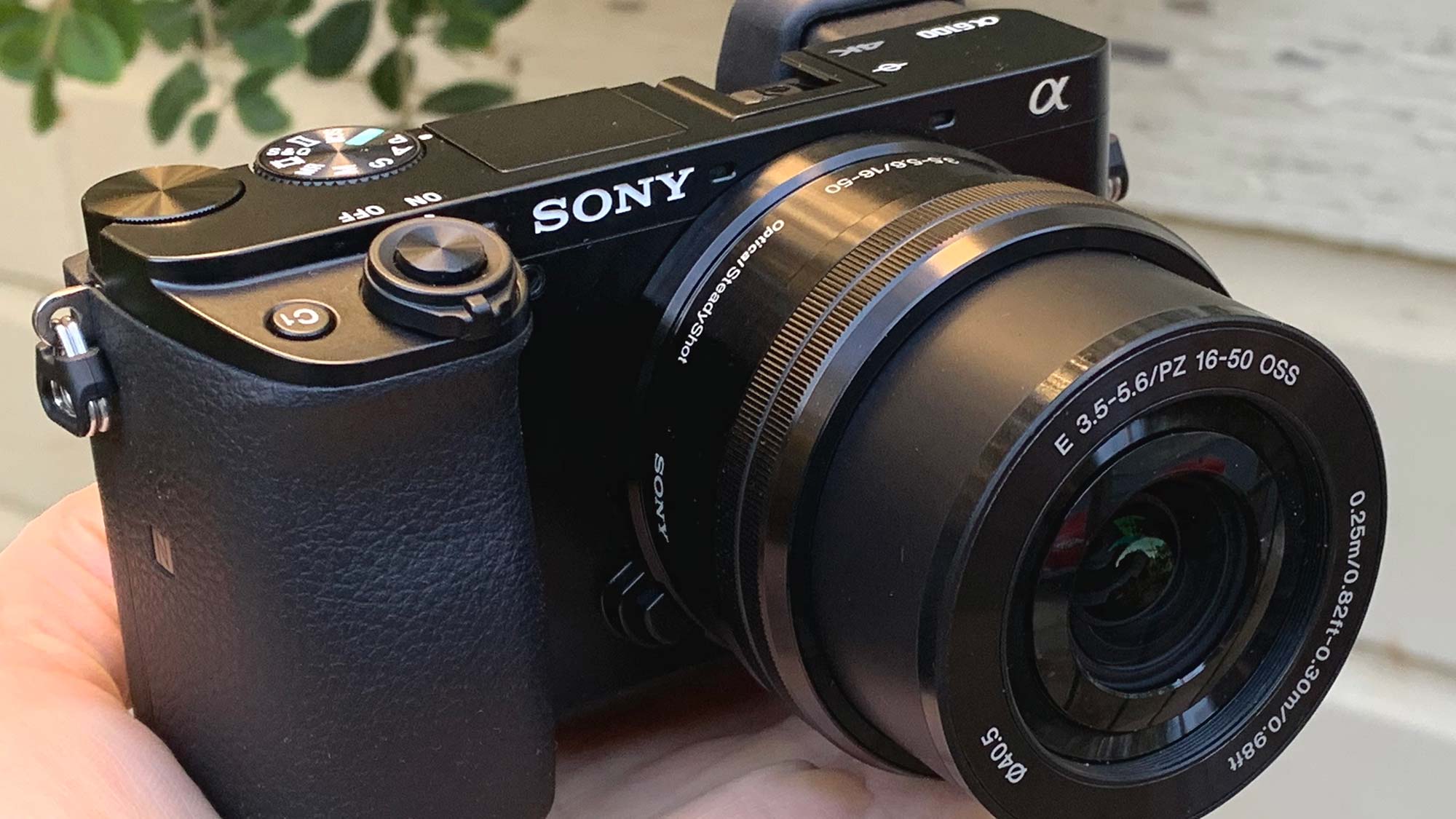
Mirrorless cameras: Fundamental specs
Price Range: $500 to $6,500
Pros: Equal to DSLR-level epitome quality in smaller camera bodies with smaller lenses; fewer moving parts to break; highest burst speeds; some models provide in-trunk 5-axis image stabilization.
Cons: Fewer lens options compared to DSLRs; lower-stop models provide only a rear screen for previewing shots; digital viewfinders may non lucifer the fidelity of a DSLR optical system.
Primal Features: Smaller interchangeable lenses; smaller camera bodies; large sensor.
Key Accessories: External flash; external electronic viewfinder; external microphone for video; video light; protective case; bag or haversack for holding unabridged organization.
With their smaller interchangeable lenses, mirrorless cameras (also known as compact organization or micro four thirds cameras) offer DSLR quality in a smaller packet. Different DSLRs, these models don't use a mirror-based optical viewfinder organization — allowing them to exist smaller and lighter. You instead preview photos using a rear screen and sometimes an LCD or OLED viewfinder.
Defective a mirror, bridge cameras tin can by and large shoot faster bursts of photos than DSLRs in the same toll range. Also, many more mirrorless cameras can shoot video in 4K than can DSLR cameras, so they can exist more than suited for videographers and vloggers. However, mirrorless cameras every bit a whole have smaller image sensors than DSLRs, and there's not as wide a range of lenses. For a more detailed breakdown, be sure to check out our DSLR vs. mirrorless photographic camera guide to see which is all-time for your needs.
Currently, our acme pick is the Sony Alpha a6100, but we accept other picks on our all-time mirrorless cameras folio, including several other Sony models, the splendid Fujifilm X-T30 and for Canon and Nikon diehards the likes of the Nikon Z5 and Canon EOS M6 Marking II.
DSLR cameras
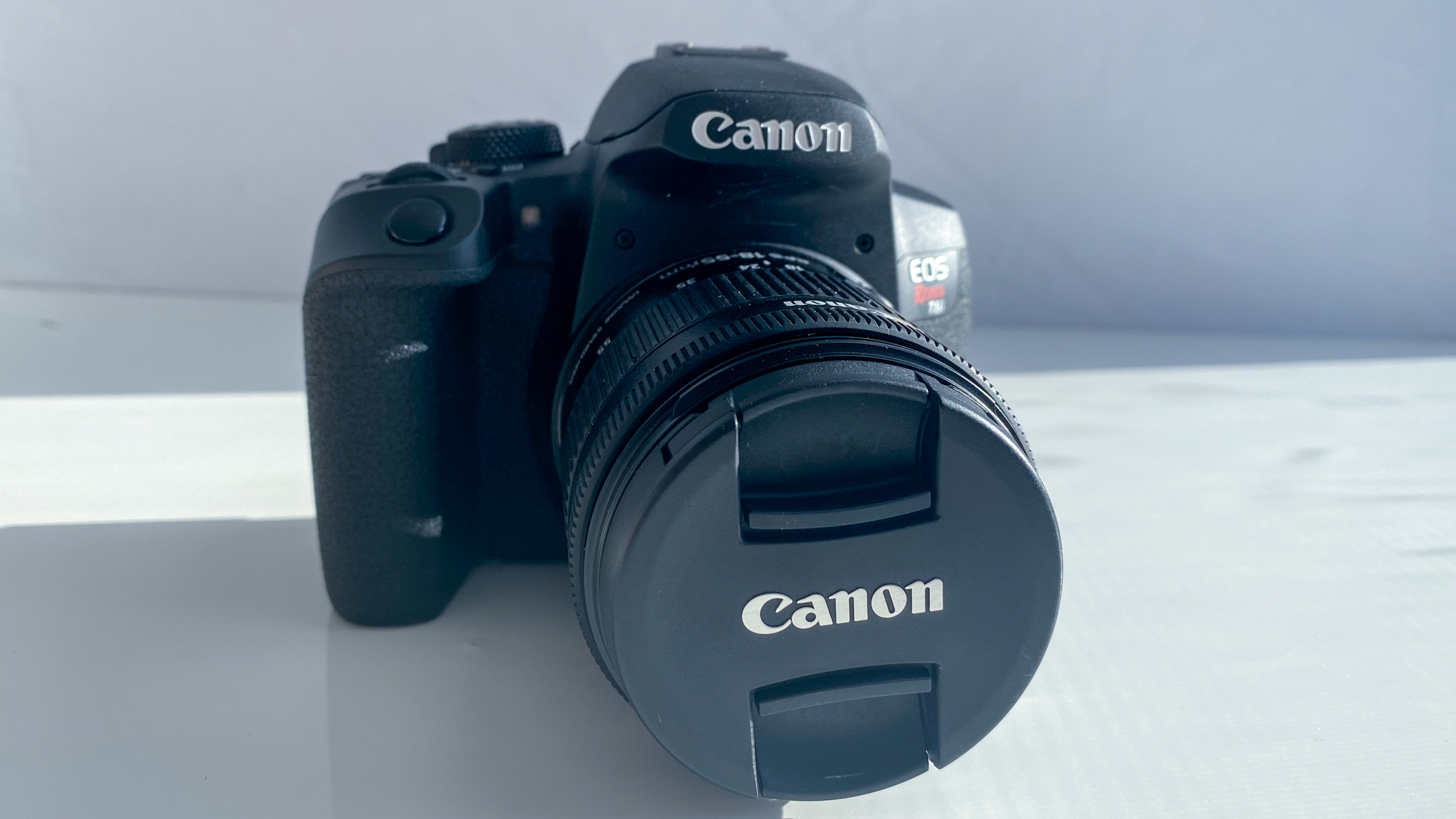
DSLR cameras: Cardinal specs
Price Range: $500 to $6,500
Pros: Widest selection of lenses; larger prototype sensors capture sharper photos, especially in nighttime conditions; ability to preview exactly what the lens sees.
Cons: The biggest and heaviest photographic camera type; expensive, especially if you purchase high-quality lenses.
Key Features: Both fully automatic and fully manual controls; interchangeable lens options; burst shooting modes for taking multiple shots in quick succession; optical viewfinder. College-end models shoot 4K video.
Central Accessories: External flash; wide diverseness of lenses; tripod; external microphone for video; video light; remote control
DSLR cameras are more or less the traditional Single Lens Reflex camera adapted for a digital age. Because of their large sensors, these cameras take long been the standard bearers for epitome quality, going back to the days of film. All DSLR cameras utilize a mirror and prism-based arrangement that lets photographers come across exactly what they're about to shoot through the lens via an optical viewfinder. When you lot press the shutter, the mirror flips up, exposing the image sensor to lite.
DSLRs are amidst the fastest cameras, and have traditionally been used by sports photographers and photojournalists for action assignments. These cameras apply interchangeable lenses, giving photographers a range of options for going wide or zooming in. Because they've been effectually for so long, DSLRs have the widest range of lenses from which to choose,
Our all-time option for everyday shooters is the Canon EOS Rebel T8i, for its combination of features and price. However, nosotros have other picks on our all-time DSLR cameras page.
Activeness cameras
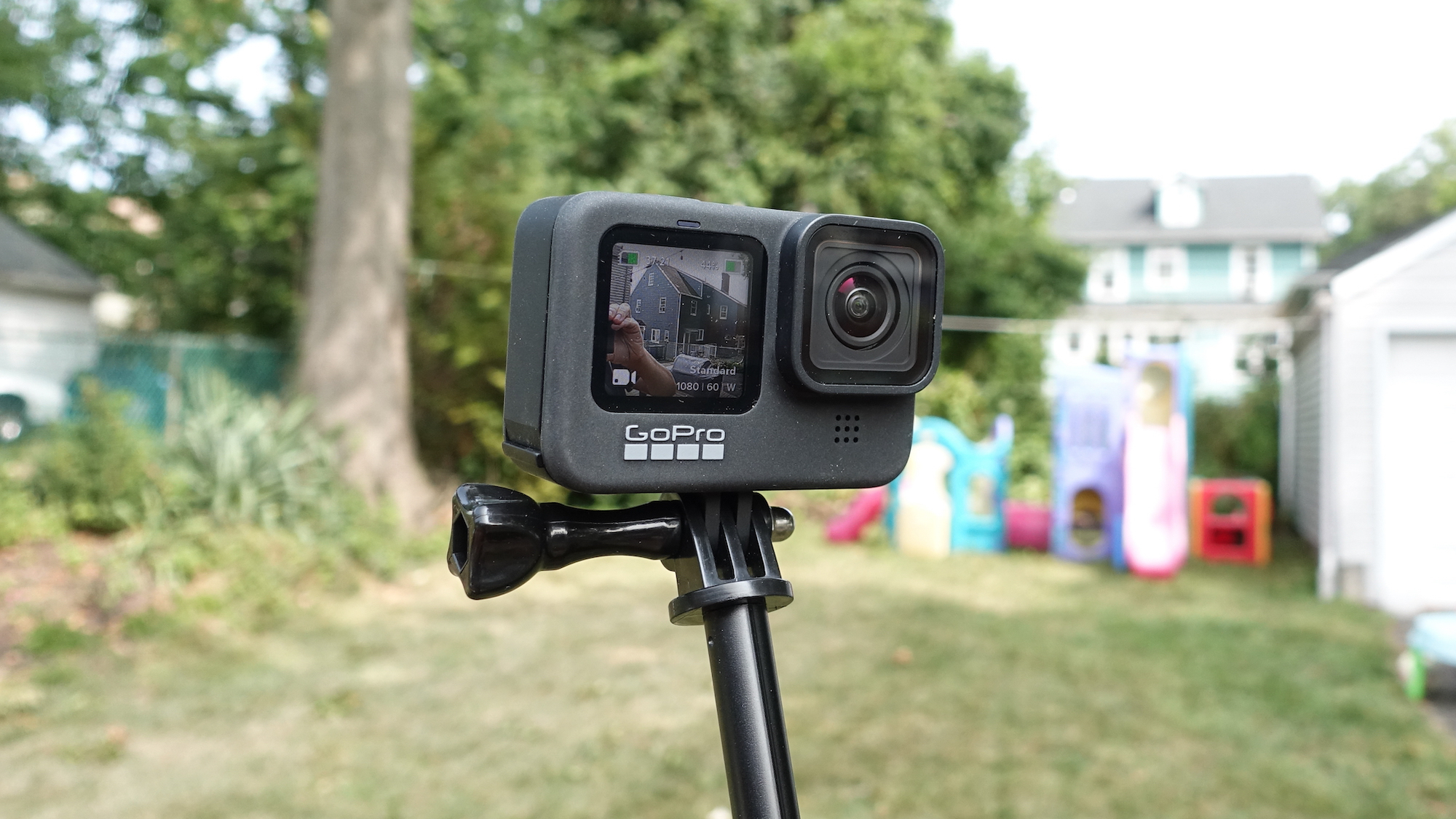
Action cameras: Key specs
Price range: Less than $100 to $600
Pros: Cameras tin can be affixed to nearly anything. Wide-angle and high-resolution cameras help ensure that y'all capture the action. Ruggedly built for all kinds of weather condition. Very meaty.
Cons: Typically no optical zoom; generally small sensors limit image quality; awkward to utilise equally a point-and-shoot.
Key features: Prototype stabilization; high burst rates for photos; wide-bending image capture; ruggedized designs.
Key accessories: A wide variety of mounts for any surface; protective covers, waterproof housings, selfie sticks, steadicam handles, micro-SD cards.
Activeness cameras do just what the name says. They tin handle jolts, water and temperature extremes that you might encounter doing sports and other outdoor activities. These cameras typically capture very broad-bending photos and videos, often at resolutions of 4K or higher, as on the GoPro Hero9 Black (which shoots up to 5K and has motion stabilization).
The cameras are quite compact, mostly smaller than indicate and shoots. Near accept a touchscreen on the rear which lets you adjust settings, and many of the better models will permit you lot control them via a smartphone app. See our listing of best action cameras to brand your choice, though the majority of the elevation models are made by GoPro.
Point and shoot cameras
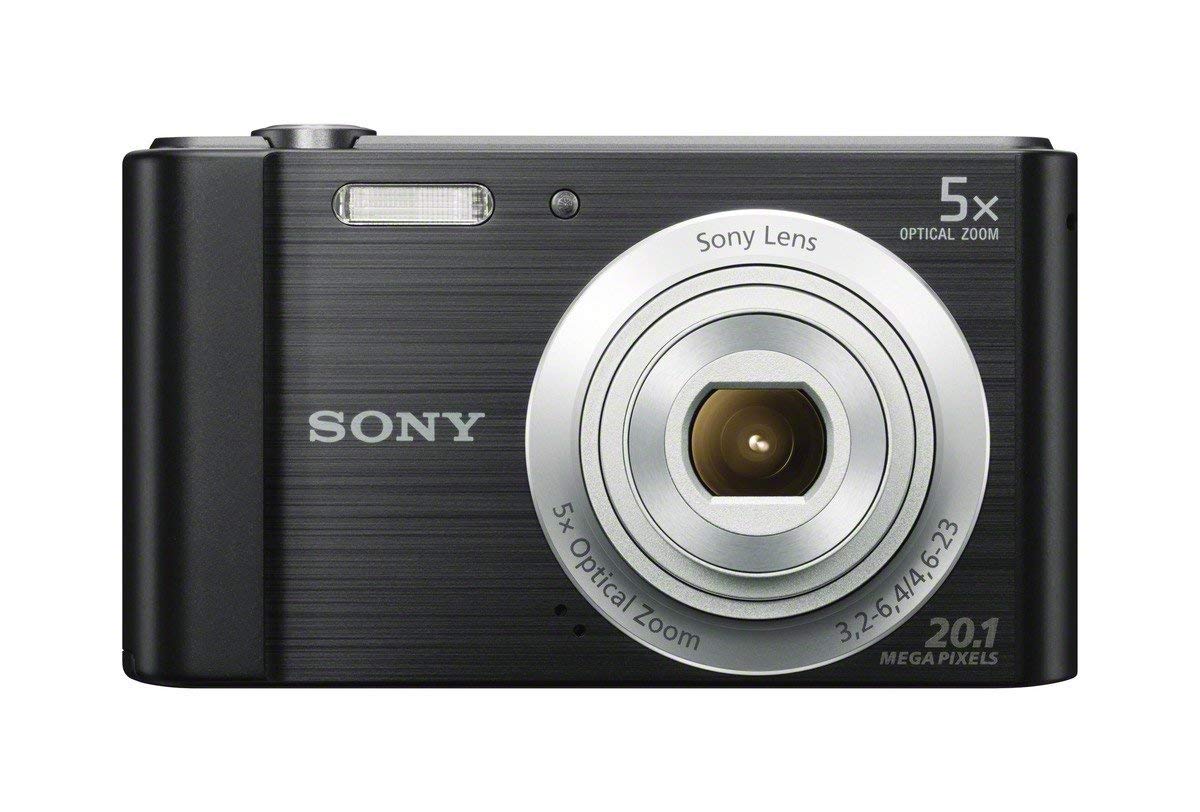
Indicate-and-shoot cameras: Key specs
Price range: Under $100 to $400
Pros: Extremely portable and oftentimes modest plenty to fit into a pocket; fully automatic; minimal investment for budget models.
Cons: Image quality not a lot improve--and possibly worse--than what you'd get with your smartphone; very modest epitome sensors produce photos with some noise in low light.
Key Features: Portability; automated photo functions; optical zoom lens; built-in image stabilization; rugged and waterproof options.
Key Accessories: SD Memory cards; protective example, hand strap.
Meaty, or point-and-shoot cameras are simple models you tin often fit in your pocket. Popular models such as the Canon PowerShot ELPH 190 don't offer much benefit over a smartphone camera, except optical zoom, which ranges from near 5x to 12x in this category. More than-expensive point-and-shoots may include optical image stabilization as well as Wi-Fi for transferring photos to a smartphone.
Betoken and shoots tin also provide special capabilities, such as rugged, waterproof designs. The Olympus Tough TG-6, for example, can survive under 50 feet of water and function at temperatures downwardly to 14 degrees Fahrenheit.
The signal-and-shoot category has also revived instant photography. Inexpensive models from Lomo, Fujifilm and Catechism capture images on movie or include mini digital printers.
Bank check our roster of the all-time point-and-shoot cameras.
Bridge cameras
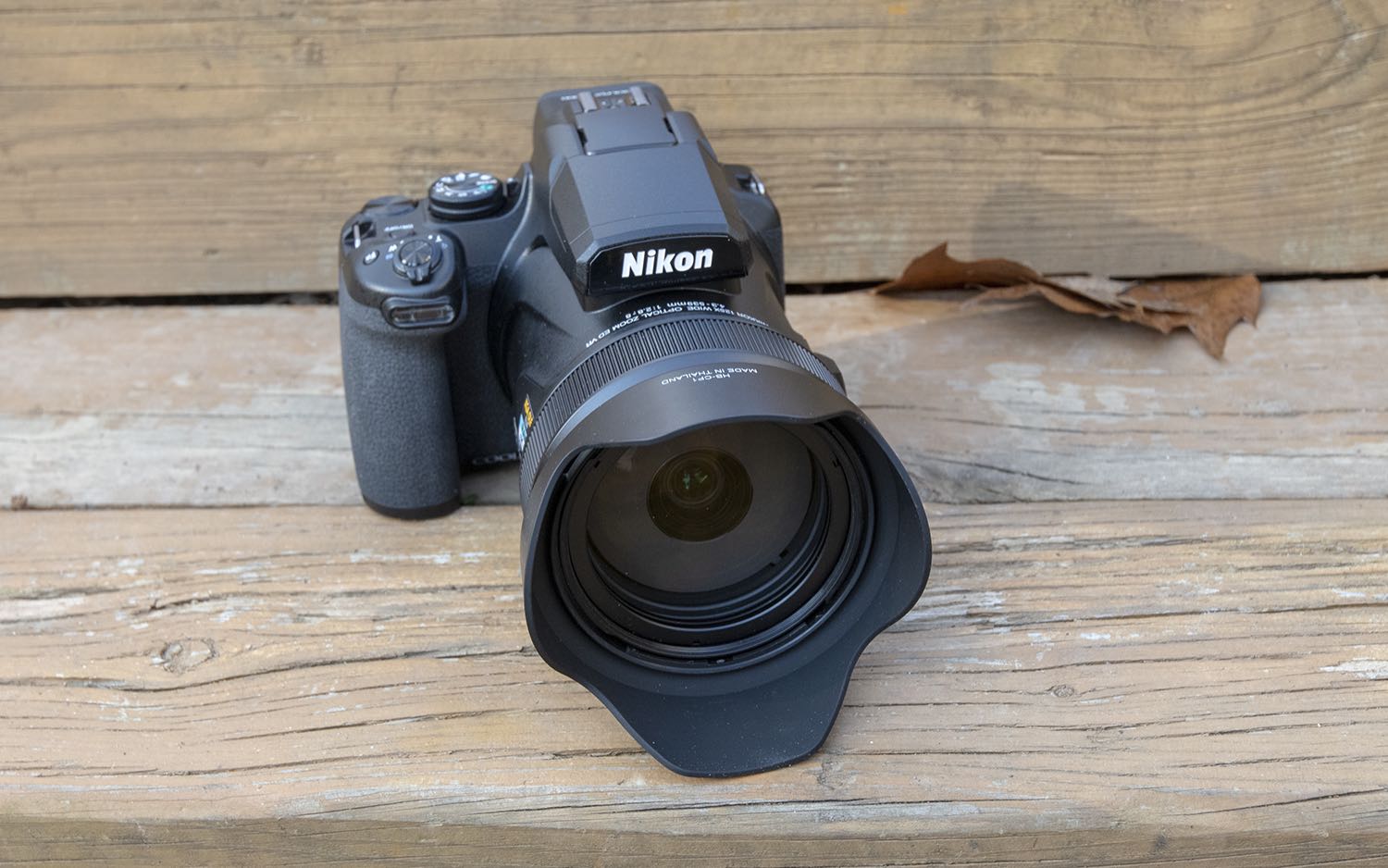
Bridge cameras: Key specs
Price Range: $400 to $3,300
Pros: Many advanced features in a more-compact design; superzoom lenses let you go very close to the action; both automatic and manual control give you picture-taking convenience and creative options.
Cons: Tin can't lucifer the quality of mirrorless and DSLR cameras, specially in low lite; may perform more than slowly than interchangeable-lens cameras; may not be much smaller than mirrorless models.
Key Features: Large sensors or superzoom lenses; all-in-one portable design; tilt-out LCD screen; higher-grade optics than found in indicate-and-shoots.
Key Accessories: Hand or shoulder strap; protective example; external flash; external stereo microphone for video.
Bridge cameras sit betwixt point-and-shoots and interchangeable lens models. They tend to go in one of two directions: big sensors or long zoom lenses. (Basic physics prevents having both in a compact design.) Big sensors typically mensurate ane inch or more, almost iv times bigger than a point-and-shoot sensor; they may besides include ultrafast phase-detection autofocus. These models, such as the Sony RX100 VII, tend to take higher-grade optics than indicate-and-shoots, such equally "fast" lenses with very large apertures for low-light photography and shallow depth of field. They may also have loftier burst speeds and shoot 4K as well equally tedious-motion video.
Superzoom photographic camera models range from most 30x to 125x (the Nikon Coolpix P1000) — literally long enough to shoot the Moon in detail. Both types of bridge cameras tend to have large rear-screens and often LCD or OLED viewfinders. Others will have features only institute on more advanced cameras, such as multiple mode dials.
Important camera features and specs
Megapixels/Resolution
The amount of megapixels a camera's sensor captures determines how much detail appears in photos and video. Simply there's a trade-off. Cramming too many megapixels onto a sensor — particularly the small chips in point-and-shoot and smartphone cameras — means small pixels with less surface expanse to capture light. The result can be noisy (grainy) photos, especially when shooting in dim conditions without flash. Bottom line: Don't worry about how many megapixels your camera has. Anything at or above 8MP is fine in a phone or bespeak-and-shoot (although the resolutions can go much college). Larger cameras typically offer 20 megapixels or more than, which is enough, even for large prints. Read our explainer on How Many Megapixels Do You Really Need.
Discontinuity
In basic terms, aperture is the size of the opening in a lens. In advanced cameras, such as digital SLRs, mirrorless compact organisation cameras, span cameras, and even many point-and-shoot models, the photographer tin can manually set the discontinuity to control the corporeality of lite that reaches the imaging sensor. Wait for lenses with a larger maximum aperture — which are inversely expressed with a lower number, such as f/2.8 or f/1.eight. They allow more than light hit the sensor, so you can shoot brighter, sharper images in dark weather condition. They can as well be set to blur the groundwork, bringing attending to the subject of the photograph.
Smartphones tend to take very big apertures, as do some bridge cameras. (But smartphone apertures usually aren't adjustable.) Budget interchangeable lenses (especially zooms) may offer only a max discontinuity of f/3.5 or smaller. You'll pay a lot more for interchangeable lenses with larger max apertures, such as f/2.8.
MORE: All-time Photo Editing Apps
Paradigm Stabilization
Optical applied science that helps reduce blur caused by hand milkshake comes in 2 varieties: in-lens and in-torso. In-lens systems physically shift an element in a lens to counteract milkshake, allowing them to compensate for some degree of movement along ii axes—horizontal and vertical. Y'all'll find ii-axis systems in some smartphones, in higher-end point-and-shoot cameras, and in many bridge cameras and lenses for mirrorless and DSLR cameras. Some mirrorless cameras, and even some loftier-cease smartphones, shift the image sensor for stabilization along up to 5 axes (horizontal, vertical, pitch, yaw and roll). You lot'll observe it in cameras such as the mirrorless Olympus OM-D E-M10 Mark 4 and the iPhone 12 Pro Max.
Cheaper smartphones and point-and-shoots, as well as very small cameras such equally activeness cameras and drones, may have but digital stabilization, which uses in-photographic camera software to right prototype mistiness, but results are oftentimes not every bit sharp as with optical stabilization.
Focal Length
Focal length describes how close a lens can make a bailiwick announced. Zoom lenses provide variable focal length, from wide-angle shots to telephoto close-ups. Focal length is specified in millimeters — such as with the roughly 18mm-55mm zoom lens bundled with many DSLR cameras — or by a magnification factor, such as 5x, 10x or 20x. With most cameras, focal length is given as its equivalent on a full-frame camera with the largest sensor type.
DSLR and mirrorless lenses are specified by their actual focal length, which will produce different results on full-frame vs smaller-sensor interchangeable-lens cameras. 50mm on a total-frame camera is roughly equivalent to how you see naturally. Shorter focal lengths are wider and longer ones are more telephoto. Some lenses, called "primes," have a stock-still focal length, such as 35mm or 50mm. While less flexible, prime lenses typically produce better prototype quality and are less expensive than equal-quality zooms because of their simpler design. A skillful prime lens is generally capable of a larger aperture.
Sensor Type and Size
The sensor converts lite into electronic signals to create a picture. Generally speaking, the bigger a sensor, the amend the photos. Bigger imaging sensors allow for some combination of more megapixels and larger pixels that can capture more light.
The largest sensor in a consumer camera is the "total-frame" sensor of loftier-end DSLRs and mirrorless cameras, so named because it'south near the same size as a piece of 35mm film. APS-C sensors, which are slightly smaller than total-frame sensors, are in mainstream digital SLRs and many mirrorless cameras. Other mirrorless cameras use sensors slightly smaller than APS-C, known as Micro Four Thirds. Smaller nevertheless are the sensors in bridge cameras, which range from point-and-shoot size to slightly larger (but commonly smaller than a mirrorless camera's). Finally, cellphones (with a few exceptions) have the smallest image sensors. For more information on sensor size see our explainer How Many Megapixels Do You Really Need.
Near all camera sensors today use CMOS chip technology. Variations, such as back-illuminated or stacked CMOS sensors, meliorate low-lite performance.
ISO Rating
ISO speed, a standard used to denote film sensitivity, has carried over to digital cameras. The higher you set the ISO, the more effective the camera is at capturing images in low light without a flash. However, there is a trade-off: Higher ISO sensitivity produces more distortion, or "noise," which shows up every bit graininess in a photo. All things being equal, a larger sensor — with larger pixels — is capable of better epitome quality at a higher ISO.
A maximum ISO adequacy of 6400 or greater will permit y'all to capture images in dim weather inside and out, only the corporeality of dissonance will depend on the size and quality of the sensor and the ability of the camera's image processor to make clean up noise. The highest ISO settings on cameras more often than not provide poor results.
Shutter Speed
The shutter speed is the amount of time the shutter is open up to expose the sensor to low-cal. The faster the shutter speed, the more conspicuously a moving object can exist captured. Shutter speed settings are typically measured in tenths or hundredths of a second.
Cameras capable of faster shutter speeds are ameliorate for freezing activity, so if you like sports photography, you want a camera that tin can shoot at one/500 of second and faster. Many DSLRs and mirrorless cameras are capable of shooting at 1/8,000, which is nice if you photograph automobile racing, but information technology's faster than most photographers probably demand. Some mirrorless and span cameras offer electronic shutters, which are fifty-fifty faster.
Shooting Rate (FPS)
About cameras have a characteristic allowing them to capture a outburst of images just by holding down the shutter push button. Often referred to every bit continuous shooting or flare-up mode, these modes are measured every bit frames per 2nd (FPS). Some DSLRs — and even some betoken-and-shoots and smartphones — offer flare-up rates upward to 10 fps. All things being equal, cameras without a mirror can shoot even faster using an electronic shutter.
Some mirrorless cameras and cellphone cameras are capable of speeds upwards to about 20fps. If you lot like shooting fast action, such equally sports, go a camera with a fast burst rate so you lot tin choose the best image from a series. (Brand sure this spec is for the number of photos shot with continuous autofocus. Otherwise a lot of your burst shots may be blurry.)
Other Features
HD Video
In one case a luxury feature, the ability to record Hd video at upwards to 1080p is now common in everything from smartphone cameras to DSLRs. In fact, Ultra HD (or 4K, which is 3840 x 2160 pixels) video is becoming common in higher-end cameras of all types, including smartphones. Even 8K resolution video (7,680 by 4,320 pixels) is starting to announced in some cameras, such as smartphones and drones.
Frame rates vary, including 60p (i.due east. 60 frames per second) for smooth video of fast action, 24fps for a motion picture-like look and even 240fps (in all iPhone 12 models) for playing back footage in irksome motion.
Wi-Fi Connectivity
Wi-Fi for sending photos to a smartphone—or controlling a camera from a smartphone—is turning up in more digital cameras these days. The process of pairing a photographic camera to a phone has gotten easier with contempo devices.
GPS Tagging
Some cameras (including all smartphones) have congenital-in GPS to geotag your photos. After your shots are geotagged with latitude and longitude, yous can import them into mapping software — such as in Apple's iPhoto — and the images will pop up on a digital map over the location where they were shot.

Source: https://www.tomsguide.com/us/camera-buying-guide,news-17666.html
Posted by: seamanviespork.blogspot.com
0 Response to "Camera buying guide: What you need to know"
Post a Comment